Tero Bot.
An operational engine for a vacation rental complex — designed and built end-to-end. IoT, invisible integrations, and a WhatsApp bot, orchestrated into a single system.

Getting my superpowers back.
I've always loved staying close to the code — from early HTML and Flash/ActionScript to building WordPress themes. But as product design became more specialized, my output got confined strictly to Figma files.
Coding with Claude gave me my superpowers back. I can finally design and execute. Tero Bot is the proof — instead of handing off UI screens to a developer, I orchestrated the entire system: IoT hardware integrations, backend data parsing, and a zero-friction WhatsApp bot for guests and staff.
This is a statement of how I want to work from now on. Less UI handoffs. More Crafted Software.
Modular architecture for the physical world.
That same instinct had to run the business behind the houses. Operating four rentals end-to-end — climate, utilities, cleaning, maintenance — is mostly recurring logistics, and off-the-shelf property software is built for agencies with staff, not for one person who just wants the manual work to disappear.
So I built my own. Tero Bot isn't a monolithic "tailor-made" app — it's a set of small, independent modules, each one earning its place by removing a specific recurring task. I add a module only once the manual version starts to hurt.
Three core modules run the system:
Automated Hospitality.
- The friction
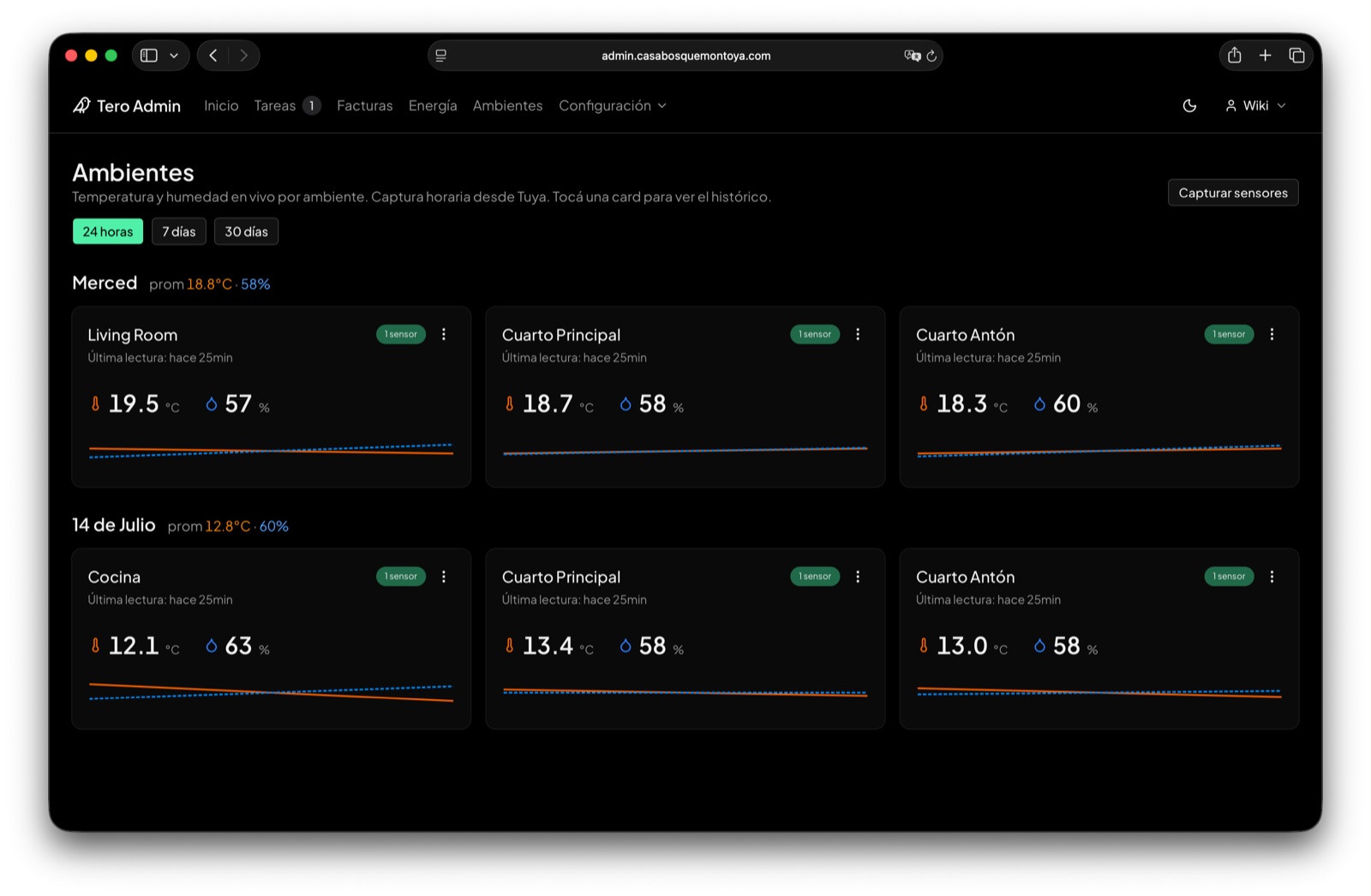
- A stay is judged in the first ten seconds, and a cold house loses the guest before they unpack — but handing them a thermostat app to fix it only trades one friction for another.
- The decision
- Climate is automated, not operated. Temperature and humidity are tracked per room and the house pre-conditions itself ahead of check-in; the dashboard exists for me to verify, never for the guest to touch.
- The reasoning
- I treated the absence of an interface as the feature. The primary interaction is simply walking into a home already at 22°C — the UI dissolves into the experience.
Invisible Operations.
- The friction
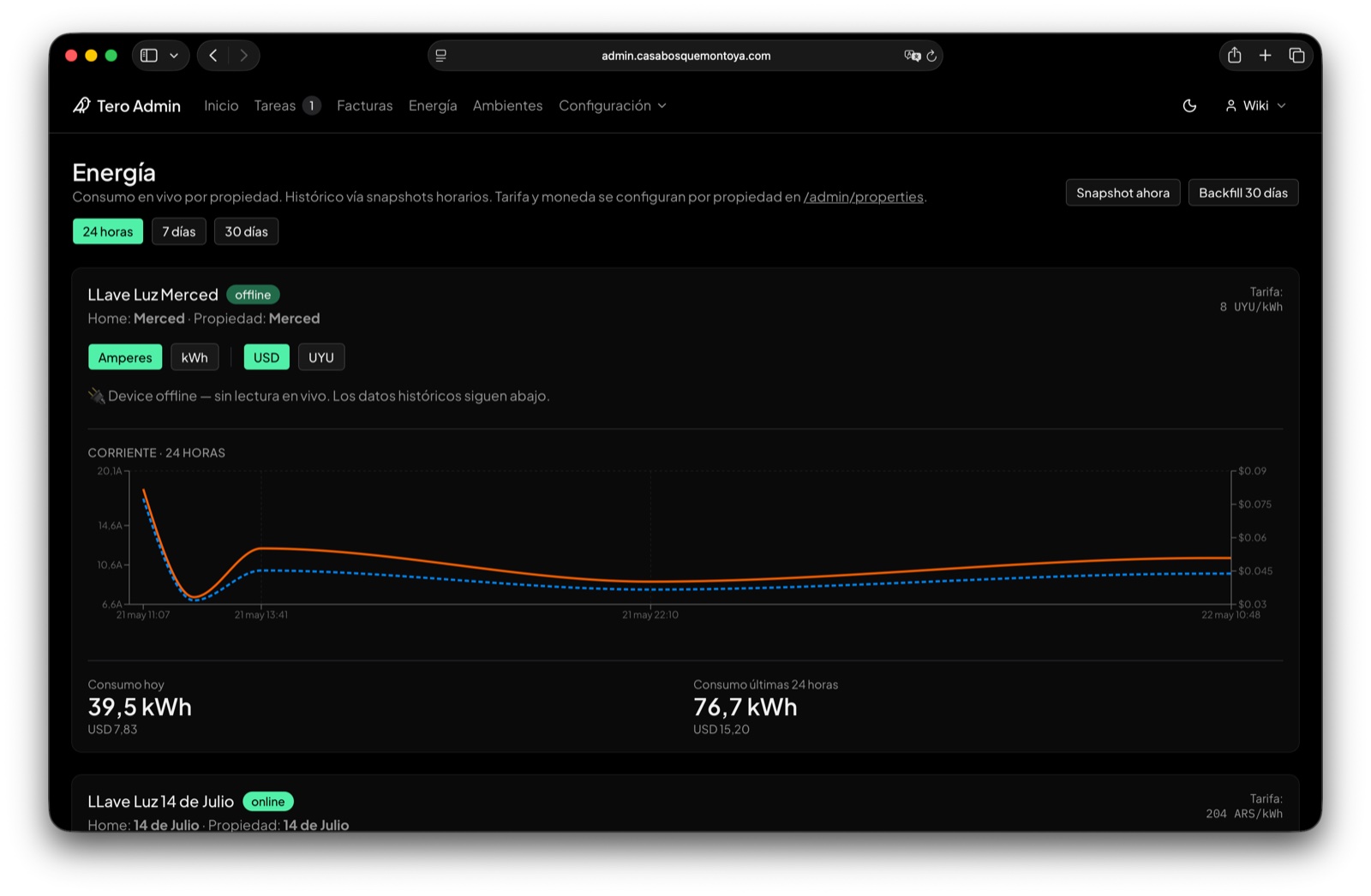
- Reconciling utility bills against occupancy is pure data entry. My designer instinct was to mock the whole thing up in Figma — forms, tables, upload states, empty states.
- The decision
- I cut those screens before building them. Forwarded bill emails are intercepted, parsed, and matched against real consumption in the backend — no form to fill, no upload, no interface to keep alive.
- The reasoning
- Every screen is a surface someone has to operate and I have to maintain. The cheapest interface is the one you never build; bureaucracy belongs in the backend, out of sight.
Zero-Friction Team UI.
- The friction
- A custom staff app means downloads, passwords, and onboarding — friction that cleaning and maintenance crews quietly route around, falling back to phone calls and notes that get lost.
- The decision
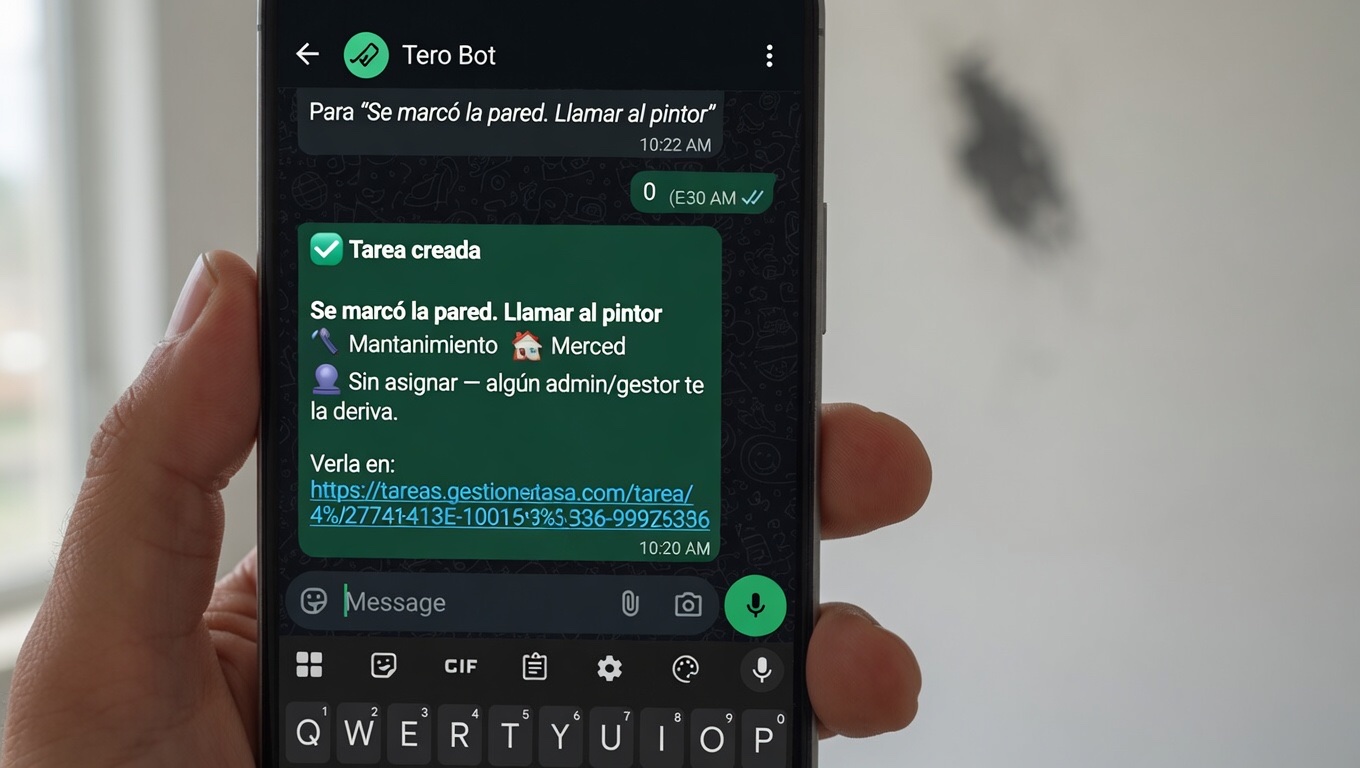
- So I built no app. Issue reports, task assignment, status, and notifications all live inside WhatsApp — the one tool the team already opens dozens of times a day — rather than a new system built from scratch.
- The reasoning
- Adoption beats features. Meeting the team inside an interface they already trust erased the rollout entirely — the system was live the moment they sent their first message.
Tero Bot is built on Kapso — a WhatsApp orchestration layer that lets the team distribute tasks, file issues, and log supply intakes without leaving the chat.
Idea → ship in one loop.
The whole product runs on a single loop — from idea to production with no handoff in between:
- 01 Linear Every request, bug, or idea opens an issue — the single backlog.
- 02 Claude Code Reads the issue, writes the patch, and commits referencing it.
- 03 Vercel Deploys in under a minute — and auto-closes the issue via the commit.
What used to be a multi-person handoff — backlog grooming, dev work, code review, QA, a deploy ticket — collapses into a single conversation. The cost per shipped change drops far enough that micro-iterations become the default, not the exception.
Zero to production in two weeks of work — the entire system designed, built, and shipped by one person, with AI handling the execution. The numbers, live from the repo:
- 317 Commits
- 89 Active hours
- 14 Active days
Learning in public.
I deeply believe in context engineering and the value of learning in public. Tero Bot is the operational engine of my properties, but I am opening the logic and the system because transparency accelerates collective judgment. Code has become a commodity; how we orchestrate the pieces is what truly scales.
Visit tero.bot